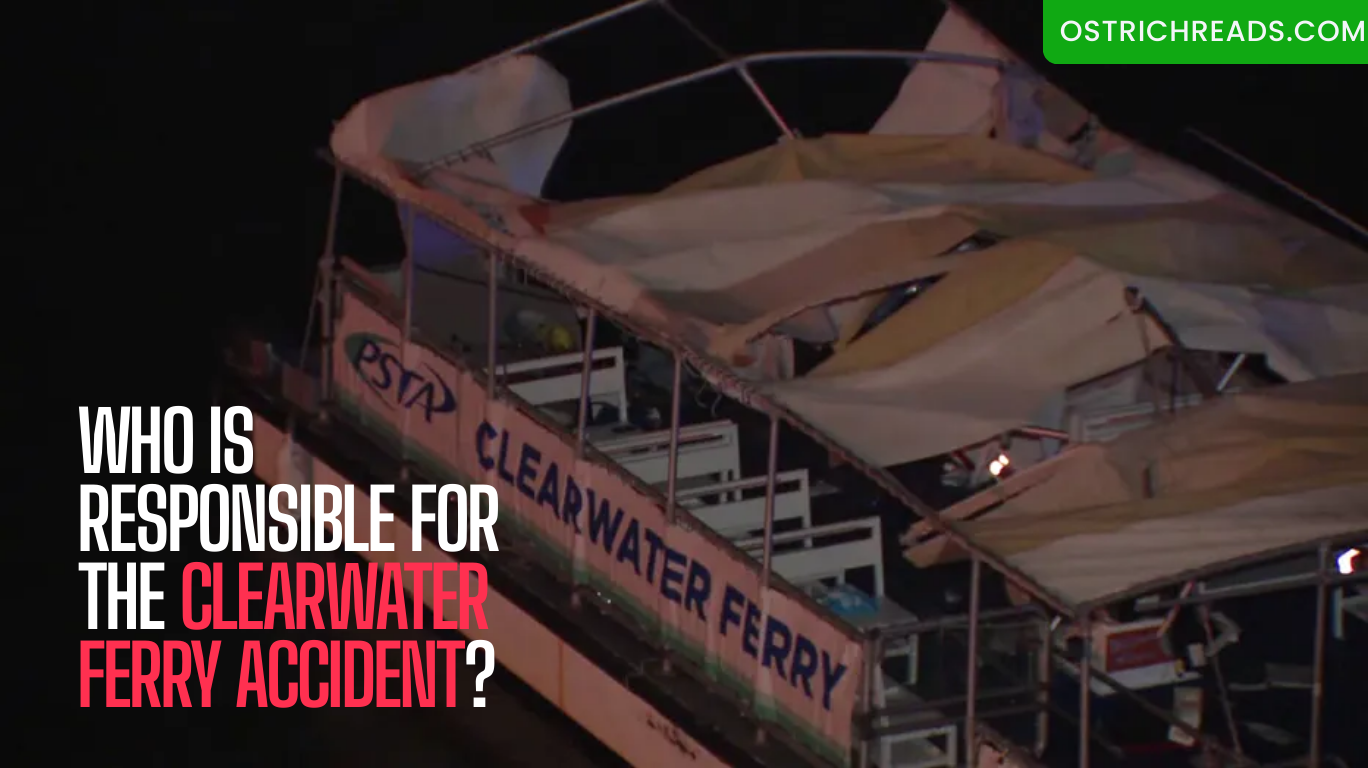
The Clearwater ferry accident shocked Florida and the nation after a violent late-night collision left one man dead and more than a dozen injured. As legal cases move forward in 2026, a key question continues to dominate public discussion: who is responsible for the Clearwater ferry accident?
The answer is complex—and now lies at the center of criminal trials, civil lawsuits, and maritime safety debates.
What Happened in the Clearwater Ferry Accident?
On April 27, 2025, at approximately 8:30 p.m., a 37-foot recreational boat slammed into the rear of a Clearwater Ferry near the Memorial Causeway Bridge.
At the time of the collision:
- The ferry was carrying 45 passengers
- The impact occurred after dark
- Emergency responders quickly labeled the incident a mass casualty event
The crash caused chaos onboard, throwing passengers, damaging the vessel, and triggering widespread injuries.
Casualties and Human Impact
Fatality
- Jose Castro, 41, a father of two from Palm Harbor, was killed in the crash
Injuries
- 10–12 passengers were injured
- Multiple victims required hospitalization
- Some survivors reported long-term physical and emotional trauma
The scale and severity of injuries were a key reason officials escalated the response level.
Legal Responsibility: Who Is Being Charged?
As of January 2026, responsibility for the Clearwater ferry accident is being examined through multiple criminal and civil cases.
Jeffry Knight: Recreational Boat Operator
Jeffry Knight, who was operating the recreational boat, faces the most serious allegations.
Charges
- 24 total charges
- 8 felony counts for leaving the scene of an accident involving injury or death
Prosecutors’ Allegations
- Knight allegedly fled the crash scene
- He was later apprehended miles away by the Pinellas County Sheriff’s Office
- Investigators say there was no evidence his boat was taking on water
Defense Argument
Knight’s defense team claims:
- He attempted to assist after the crash
- He left only because he believed his vessel was unsafe
- He did not intentionally evade responsibility
Trial Status
- Pre-trial hearing: January 12, 2026
- Trial tentatively scheduled for October 2026
Dennis Kimerer: Clearwater Ferry Captain
The ferry captain, Dennis Kimerer, also faces legal scrutiny—though on a much smaller scale.
Charge
- Misdemeanor navigational violation
Allegation
- Failure to display a working stern light at the time of the collision
This charge raises questions about visibility and compliance with maritime safety regulations.
Investigation Findings That Matter
Investigators uncovered multiple concerning details that continue to shape accountability discussions.
Key Findings
- Radar on Knight’s boat was reportedly non-functional
- His vessel allegedly lacked a proper all-around white navigation light
- Passengers on Knight’s boat told investigators he panicked
- Witnesses claimed he attempted to stop them from calling emergency services
These findings have become central to both criminal prosecution and civil lawsuits.
Civil Lawsuits: Survivors Seek Accountability
Beyond the criminal court, multiple civil lawsuits have been filed against Jeffry Knight.
Plaintiffs Include
- A Pinellas Park teacher
- Other injured ferry passengers
Allegations
- Negligent operation
- Excessive speed
- Failure to maintain proper safety equipment
These lawsuits aim to recover damages for medical bills, lost wages, and emotional distress.
So, Who Is Responsible for the Clearwater Ferry Accident?
Responsibility may ultimately be shared, depending on court outcomes.
- Criminal responsibility may rest primarily with the recreational boat operator
- Operational responsibility includes scrutiny of ferry lighting and navigation compliance
- Systemic responsibility raises broader questions about nighttime maritime safety enforcement
Courts will decide legal fault—but public debate continues.
FAQs
What caused the Clearwater ferry accident?
The collision occurred when a recreational boat struck the rear of a ferry at night. Investigations cite speed, lighting issues, and equipment failures as contributing factors.
Has anyone been convicted yet?
No. As of January 2026, cases are still in pre-trial and trial preparation stages.
Why is this considered a mass casualty event?
Due to the number of injured passengers and the severity of injuries sustained.
Conclusion
The Clearwater ferry accident is no longer just a tragic collision—it has become a defining case in maritime safety accountability. As trials and lawsuits move forward, the outcome could influence how nighttime ferry operations and recreational boating laws are enforced across Florida and beyond.